
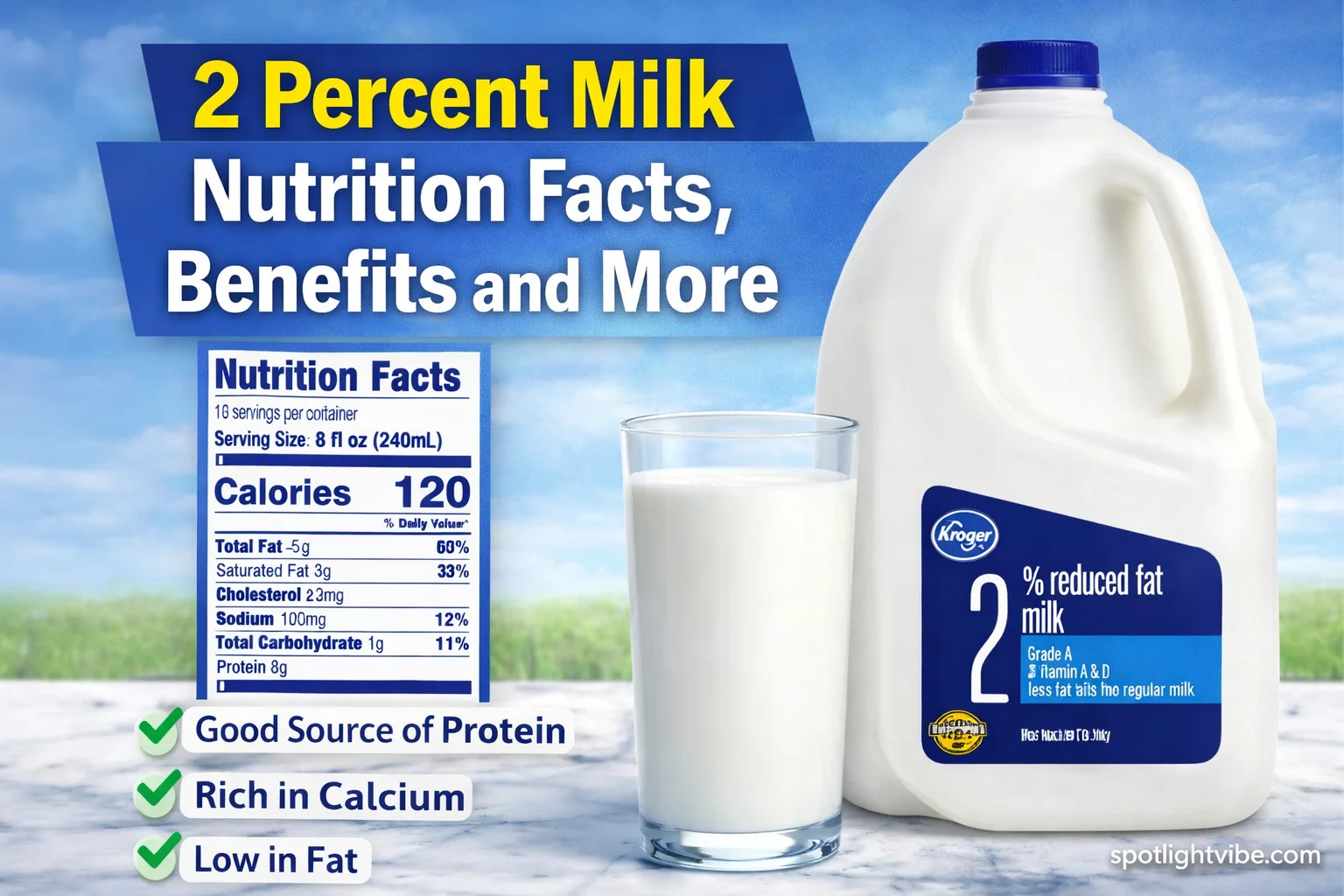
If you grab a carton of milk at the grocery store without reading the label, there is a good chance it is 2 percent milk. It is the most popular type of milk in American households. But what exactly are the 2 percent milk nutrition facts? What nutrients does it contain, how does it compare to other types of milk, and is it actually a healthy choice for you?
This article breaks it all down in simple, clear terms so you can make a confident decision about what you pour into your glass every morning.
Full 2 Percent Milk Nutrition Facts (Per 1 Cup / 8 oz)
Here is the complete nutritional breakdown of one cup (240 ml) of 2 percent milk:
| Nutrient | Amount Per Cup |
|---|---|
| Calories | 120 |
| Total Fat | 5 g |
| Saturated Fat | 3 g |
| Cholesterol | 20 mg |
| Sodium | 115 mg |
| Total Carbohydrates | 12 g |
| Sugars (Lactose) | 12 g |
| Protein | 8 g |
| Calcium | 300 mg (23% DV) |
| Vitamin D | 2.5 mcg (15% DV) |
| Potassium | 366 mg (8% DV) |
| Phosphorus | 230 mg (20% DV) |
| Vitamin A | 150 mcg (15% DV) |
Percent daily values are based on a 2,000 calorie diet.
Calories in 2 Percent Milk
One 8-ounce serving of 2 percent milk contains 120 calories and 5 grams of total fat, including 3 grams of saturated fat. This makes it a manageable option for most people watching their calorie intake without dropping to skim milk.
For context, if you drink two cups of 2 percent milk per day, that is 240 calories total. That is a reasonable amount for the nutritional value you get in return, including protein, calcium, and a range of vitamins.
Protein in 2 Percent Milk
One cup of 2 percent milk delivers 8 grams of high-quality protein. This protein includes all essential amino acids, with about 80 percent coming from casein and 20 percent from whey, both of which support muscle growth, repair, and overall health.
This makes 2 percent milk a great post-workout drink or a simple protein source at breakfast. Two glasses cover about one-third of the average adult’s daily protein needs.
Fat Content: What You Need to Know
The 5 grams of fat per cup in 2 percent milk includes 3 grams of saturated fat. Many people worry about saturated fat and heart health. Experts continue to recommend limiting saturated fat to 10 percent or less of total daily calories, but recent evidence suggests that saturated fat from dairy products may not necessarily raise the risk of heart disease.
The fat in 2 percent milk also plays an important role in nutrient absorption. Fat-soluble vitamins like A, D, E, and K all need dietary fat to be absorbed properly by the body. This means the small amount of fat in 2 percent milk actually helps your body use the vitamins it contains.
Vitamins and Minerals in 2 Percent Milk
Calcium
Calcium is the standout mineral in 2 percent milk. One cup provides about 300 mg, which is roughly 23 percent of the daily recommended value for most adults. Calcium is essential for strong bones and teeth, healthy muscle function, and proper nerve signaling.
Getting enough calcium through food is far more effective than supplements for most people. Two cups of 2 percent milk per day gets you nearly halfway to your daily calcium goal.
Vitamin D
Most milk, regardless of fat level, is voluntarily fortified with vitamin D. If added, it must provide 400 International Units per quart, which is about 2.5 micrograms per cup. Vitamin D helps your body absorb calcium, supports immune function, and plays a role in mood regulation.
A large portion of the global population is deficient in vitamin D, making fortified milk one of the easiest and most affordable ways to address that gap.
Vitamin A
While whole milk is a natural source of vitamin A, some of it is lost when cream is removed to make lower-fat milk. To compensate, reduced-fat milks like 2 percent are fortified with vitamin A to provide at least 2,000 IUs per quart.
Vitamin A supports vision, immune health, and skin cell turnover. One cup of 2 percent milk provides about 15 percent of your daily value.
Potassium and Phosphorus
One cup of 2 percent milk contains around 366 mg of potassium and 230 mg of phosphorus. Potassium helps regulate blood pressure and supports heart function. Phosphorus works alongside calcium to maintain bone density.
Most people do not get enough potassium through their diet, so milk is a practical everyday source.
2 Percent Milk vs. Other Types of Milk
Here is a quick side-by-side comparison of the four main types of cow’s milk per 8-ounce serving:
| Type | Calories | Fat | Protein | Calcium |
|---|---|---|---|---|
| Whole milk | 150 | 8 g | 8 g | 300 mg |
| 2 percent milk | 120 | 5 g | 8 g | 300 mg |
| 1 percent milk | 100 | 2.5 g | 8 g | 300 mg |
| Skim milk | 80 | 0 g | 8 g | 300 mg |
An 8-ounce serving of 2 percent milk contains 5 grams of fat and has the same 13 essential nutrients as every other type of cow’s milk. The main difference is simply the fat and calorie count.
If you want to cut calories without losing protein or calcium, 1 percent or skim milk works. But if you want more flavor, better vitamin absorption, and a creamier texture than skim, 2 percent milk is a smart middle-ground choice.
Who Should Drink 2 Percent Milk?
2 percent milk works well for a wide range of people.
Adults managing weight: It offers significantly fewer calories than whole milk while keeping all the key nutrients. Swapping whole milk for 2 percent can save about 30 calories per cup, which adds up over time.
Active individuals and athletes: The combination of protein, potassium, and calcium makes 2 percent milk a solid recovery drink after exercise. It helps with muscle repair and replaces electrolytes lost during a workout.
Children over 2 years old: The Academy of Nutrition and Dietetics recommends low-fat dairy products for healthy children over 24 months of age. 2 percent milk gives growing kids the calcium and vitamin D they need for strong bones without excess saturated fat.
Older adults: Bone density decreases with age, making calcium and vitamin D increasingly important. Two cups of 2 percent milk daily provides a meaningful portion of both.
Lactose in 2 Percent Milk
The 12 grams of carbohydrates in one cup of 2 percent milk come almost entirely from lactose, which is the natural sugar found in all dairy milk. Lactose gives milk a slightly sweet taste.
If you are lactose intolerant, regular 2 percent milk may cause bloating, gas, or stomach discomfort. The good news is that lactose-free versions of 2 percent milk are widely available. They contain the same nutrients but with lactase added to break down the lactose before it reaches your gut.
Conclusion
The 2 percent milk nutrition facts tell a clear story: this is a nutrient-dense, balanced beverage that delivers real value with every cup. You get 8 grams of protein, 300 mg of calcium, 120 calories, and a solid dose of vitamins A and D in a single serving.
Whether you are managing your weight, building muscle, supporting bone health, or just looking for a wholesome everyday drink, 2 percent milk earns its place in your fridge.
Start reading the labels on your milk carton today. Understanding what is inside helps you drink smarter and live healthier, one glass at a time.
Frequently Asked Questions
How many calories are in one cup of 2 percent milk?
One cup (8 oz) of 2 percent milk contains 120 calories, with 5 grams of fat and 8 grams of protein.
Is 2 percent milk good for building muscle?
Yes. With 8 grams of complete protein per cup including both casein and whey, it supports muscle repair and growth effectively.
Does 2 percent milk have more sugar than whole milk?
No. Both contain about 12 grams of natural lactose per cup. Neither has added sugar.
Is 2 percent milk healthier than whole milk?
It depends on your goals. 2 percent milk has fewer calories and less saturated fat, but whole milk has more fat-soluble vitamin absorption. Both are nutritious choices.
About the Author