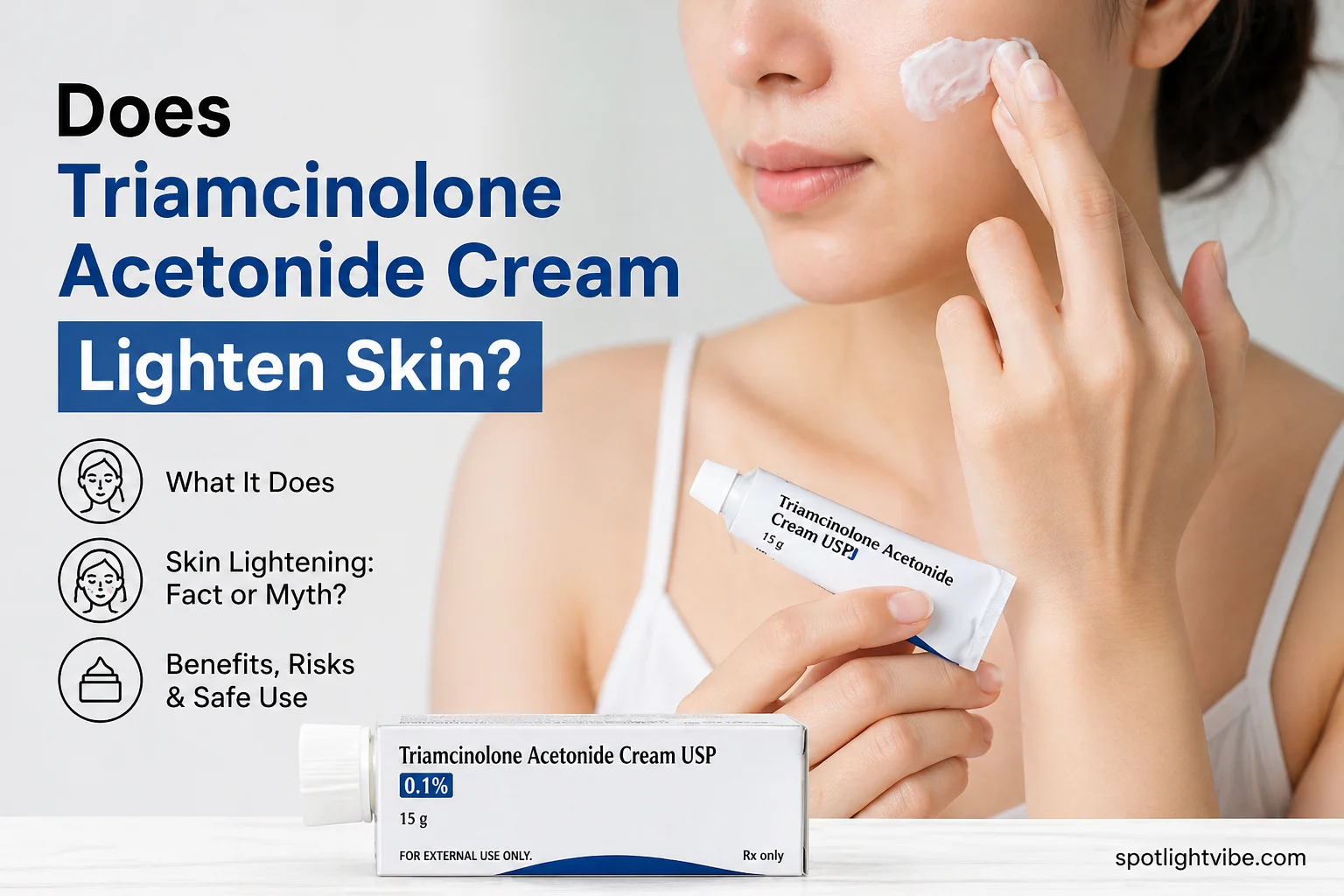
If you have used triamcinolone acetonide cream and noticed lighter patches on your skin, you are not alone. Many people ask this exact question. The short answer is: this cream is not a skin lightener. But it can cause skin lightening as a side effect, especially with long-term or improper use.
Does Triamcinolone Acetonide Cream Actually Lighten Skin?
Not intentionally. Triamcinolone acetonide cream is not a skin bleaching or whitening product. It was never designed for cosmetic skin lightening.
However, some people do notice lighter or paler patches of skin after using it. This happens for a few specific reasons, which are explained below.
It is important to know that any lightening effect from this cream is considered a side effect, not a benefit. Using it to lighten your skin on purpose is dangerous and not medically approved.
Why Does Triamcinolone Acetonide Sometimes Cause Skin Lightening?
There are three main reasons why skin may appear lighter after using this cream:
1. Reduced Inflammation Makes Skin Look Lighter
Inflamed skin often looks darker, redder, or more pigmented. When triamcinolone reduces inflammation, that redness fades. The skin then returns to a more normal tone or looks lighter by comparison.
This is not true skin lightening. The melanin (pigment) in your skin has not changed. It is simply that the redness and swelling have gone down, making the area look clearer.
2. Suppressed Melanin Production
Corticosteroids like triamcinolone can interfere with melanocytes, which are the cells that produce melanin (the pigment responsible for skin color). With long-term use, these cells produce less melanin in the treated area. This leads to actual hypopigmentation (lighter patches).
This effect is more visible in people with darker skin tones, where the contrast between the lighter patch and surrounding skin is more noticeable.
3. Skin Thinning (Atrophy)
Long-term use of strong steroid creams causes the outer layer of skin to become thinner. Thinner skin is more transparent and can appear lighter or even shiny. It also becomes more fragile and easier to bruise.
This is one of the most serious side effects of steroid overuse and is called steroid-induced skin atrophy.
Is the Skin Lightening from Triamcinolone Permanent?
In most cases, no. The lightening effect from triamcinolone acetonide cream is usually temporary. Once you stop using the cream, your skin should gradually return to its natural color over weeks or months.
However, this depends on:
- How long you used the cream
- How strong the concentration was
- How often you applied it
- The area of skin treated (thinner skin areas are more vulnerable)
If you used the cream for a very long time or in high doses, it may take longer for your skin to recover. In rare cases of severe skin atrophy, the changes may be difficult to reverse.
Always speak to your doctor if you notice any unusual skin changes during or after treatment.
Risks of Using Triamcinolone Acetonide for Skin Lightening
Some people, especially in South Asia and Africa, use steroid creams off-label as skin lighteners. This is a growing and dangerous practice. Using triamcinolone acetonide for cosmetic skin lightening can cause:
- Skin thinning (atrophy): The skin becomes thin, fragile, and prone to tearing or bruising.
- Stretch marks (striae): Permanent stretch marks can form, especially on the thighs, underarms, and stomach.
- Spider veins: Small visible blood vessels appear near the surface of the skin.
- Acne flares: Steroid acne can develop on treated areas.
- Increased hair growth (hypertrichosis): Fine hair on the face or body may become more noticeable.
- Worsened skin infections: Steroids suppress the immune response, which can allow bacteria or fungi to grow unchecked.
- Perioral dermatitis: A rash around the mouth caused by steroid use on the face.
- Systemic absorption: Using the cream over large areas for a long time allows it to absorb into the bloodstream, potentially affecting hormones and organs.
These risks are real and well-documented. No cosmetic benefit is worth this level of potential harm.
Areas Where You Should Never Apply Triamcinolone Acetonide
Even when using it for a legitimate medical condition, there are areas where you should not apply this cream unless your doctor specifically tells you to:
- The face (especially around the eyes, nose, and mouth)
- The groin or genitals
- The underarms
- Under the breasts
- Broken or infected skin
Skin in these areas is thinner and absorbs more of the medication, which significantly increases the risk of side effects.
What to Use Instead for Skin Lightening
If your goal is to even out your skin tone or reduce dark spots, there are safer and more appropriate options available. These are specifically designed for skin lightening and are much safer when used correctly:
- Alpha-arbutin: A gentle skin brightener that reduces melanin production without harming skin structure.
- Vitamin C (ascorbic acid): A powerful antioxidant that fades dark spots and brightens overall skin tone.
- Niacinamide: Reduces pigmentation, strengthens the skin barrier, and has anti-inflammatory properties.
- Azelaic acid: Fades post-inflammatory hyperpigmentation and is safe for most skin types.
- Kojic acid: Derived from fungi, it inhibits melanin production and helps with uneven skin tone.
- Tranexamic acid: A newer ingredient effective for melasma and stubborn pigmentation.
For dark spots caused by acne, sun damage, or hormonal changes, a dermatologist can also recommend retinoids, chemical peels, or laser treatments.
Who Should Be Extra Careful with This Cream?
Certain people should speak to their doctor before using triamcinolone acetonide cream:
- People with diabetes (steroids can raise blood sugar levels)
- Pregnant or breastfeeding women
- Children (their skin absorbs more of the medication)
- People with a history of skin infections
- People who are already using other steroid medications
Children in particular are at higher risk of absorbing too much of the steroid through the skin because their skin-to-body-weight ratio is larger.
Conclusion
Triamcinolone acetonide cream does not lighten skin by design. It is a medically prescribed corticosteroid meant to treat inflammatory skin conditions. Any skin lightening that occurs is a side effect, not a treatment goal.
Using this cream off-label as a skin lightener is risky and can lead to permanent skin damage. If you want to safely address uneven skin tone or dark spots, consult a dermatologist. They can recommend proven, safer ingredients like niacinamide, alpha-arbutin, or vitamin C that are actually made for the job.
If you are currently using triamcinolone and have noticed skin color changes, speak to your doctor before making any adjustments to your routine. Always use prescription medications only as directed.
This article is for informational purposes only and does not replace professional medical advice. Always consult a licensed healthcare provider before starting or stopping any medication.
Frequently Asked Questions
Does triamcinolone acetonide cream permanently lighten skin?
No, the lightening is usually temporary. Skin typically returns to its normal color after you stop using the cream, though it may take several weeks or months.
Can I use triamcinolone acetonide cream on my face to brighten skin?
No. Using it on the face for cosmetic purposes is unsafe and can cause serious side effects including skin thinning, acne, and visible blood vessels.
How long does it take for triamcinolone to cause skin lightening?
Noticeable lightening from long-term use can begin within a few weeks of daily application, especially on thinner areas of skin.
Is triamcinolone acetonide the same as a skin bleaching cream?
No. Skin bleaching creams like those containing hydroquinone are designed to reduce melanin. Triamcinolone is a corticosteroid designed to reduce inflammation. Any lightening it causes is a side effect, not an intended result.
What happens if I use triamcinolone acetonide cream for too long?
Long-term overuse can lead to skin thinning, stretch marks, spider veins, steroid acne, hormonal disruption, and permanent changes to the skin’s structure.
About the Author